Lifestyle
How is VR changing property?

Published: 20/07/2017

Following last week’s blog on how AI is changing the property market, it only seemed natural to address how Virtual Reality (VR) is changing the property market. In a nutshell, VR is a simulation of a three-dimensional environment that can be interacted with – most commonly by wearing a headset with a screen equipped.

Most of the interest in VR initially came from the gaming industry which, incorporated with haptics, would enable a much more immersive experience in a game world. However, the property market quickly caught on, eyeing an opportunity for VR to be used to visualise properties from the comfort of your home or an estate agents’ office.
VR explained
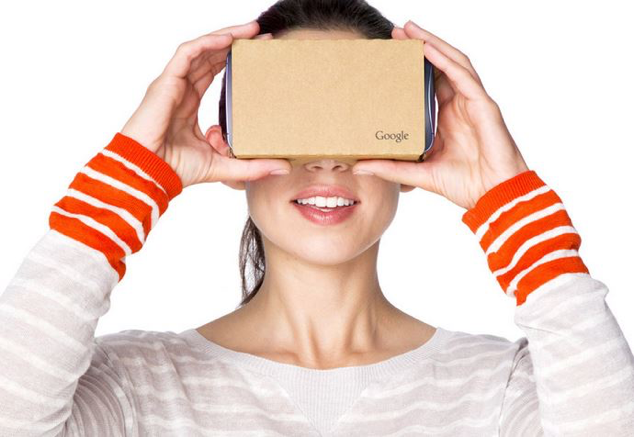
On the lower end of the spectrum lies Google Cardboard. Priced at around £12, this is one of the most affordable options and is used with a smartphone attached, giving you access to VR from anywhere in the world. The gyroscope on the mobile phone can detect your movements, and in a VR property viewing, this translates to you moving around the property!

On the higher end of the spectrum lie devices such as the Oculus Rift, which relies on a powerful PC to give as much of a lifelike experience as possible, including sound, to make the experience as realistic and enjoyable as possible.
Google VR
Why VR is a game changer
For prospective tenants, estate agents and landlords, the process of searching, scheduling and viewing properties is extremely time consuming. Properties take an average of 5.8 viewings before they are let, with tenants staying for an average of 18 months at a time. At approximately 180 properties per branch, this equates to 900 viewings per month, taking up a significant portion of time for estate agents and landlords. VR could significantly speed up this process, allowing prospective tenants to view more properties, cutting costs for estate agents and generally streamlining the entire process. The situation is similar for property sales, where each home is viewed an average of 15 times. Whilst having VR in place could lead to several more remote ‘views’, this could help cut out the people who are not interested enough in the property to put forward an offer.

Implementing VR
As more and more estate agents have looked to implement VR technology, it has indeed got better, especially with the backing of the gaming industry. The use of 360 degree cameras has enabled high-definition video tours of properties, but can even be done on a budget with camera attachments for mobile phones, making them cheap, quick to set up and providing professional results. The various delivery methods – be it on a Google Cardboard or an Oculus Rift – can also implement sound, which can greatly enhance the feel for a property, be it smooth jazz for a sleek and modern property, or ambient electronic for a minimalist home.
VR Camera
https://www.bublcam.com/
The property industry has the potential to massively take advantage of VR in the industry. As more estate agents, home owners and landlords express an interest, the industry will continue to innovate in this area, looking to fully immerse users in a property experience. Though applications are still being refined and tested, VR in property is now a matter of when, not if, as the industry moves in a digital direction.

https://my.matterport.com/show/?m=LovwjWHQsFJ>
You May Also Like