Lifestyle
What does Brexit mean for the property market?

Published: 04/07/2017

With Article 50 being triggered just over a year ago, the property market entered a certain level of turmoil. Prices fluctuated and people held on to property, afraid to let go in uncertain times. However, now that negotiations have begun and the future is slightly more certain, the fate of the property market has become less hazy, showing that Brexit has, and will have, little effect on house prices.
It’s not the prices that are changing
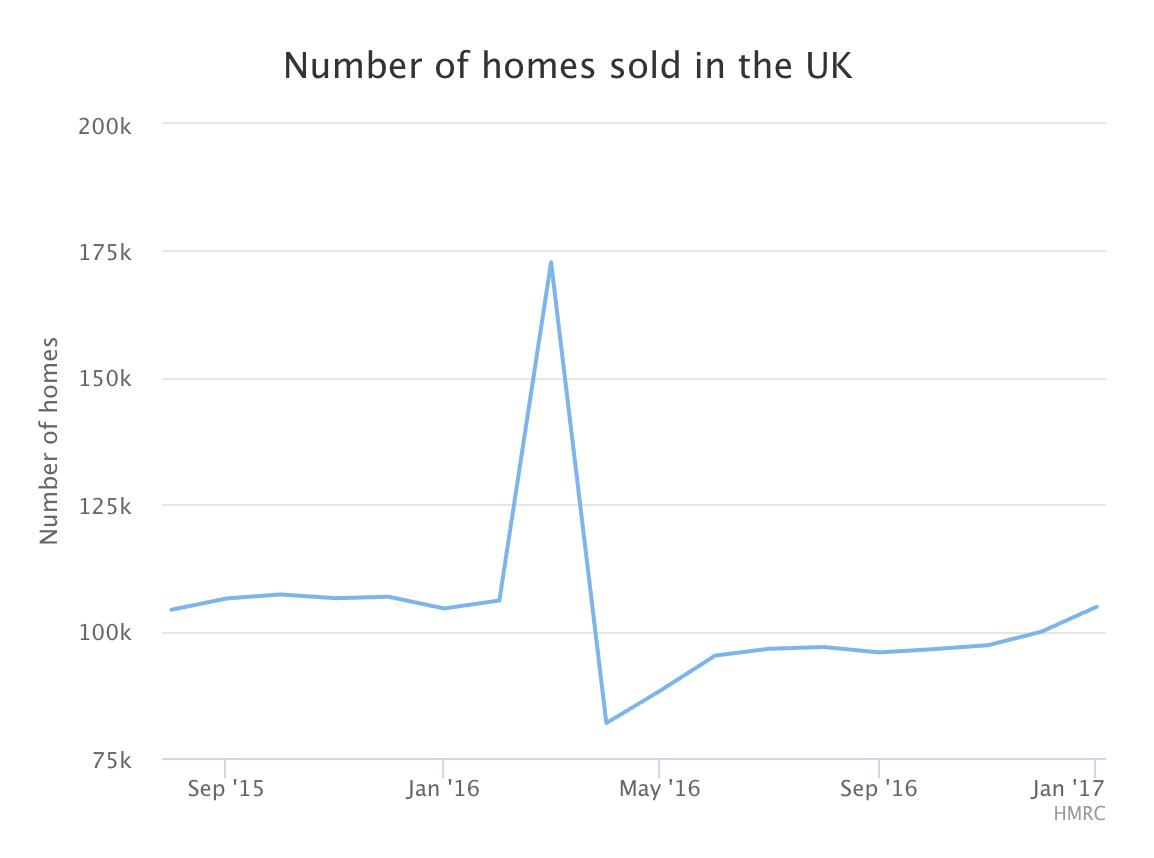
While property prices may barely be faltering (and even growing in some places), transaction levels are the most heavily affected by the vote, with the number of homes on the market having hit a record low, along with the number of inquiries. Savills, the estate agents, forecast that the number of homes sold will fall by 16% from this year to the next. However, many experts have also argued that on the higher end of the market this reduction in sales has been affected by recent hikes in stamp duty.
Homes Sold Graph
http://www.telegraph.co.uk/property/house-prices/what-does-brexit-mean-for-house-prices-if-we-leave-will-it-solve/
Influence from abroad
With the pound repeatedly hitting low points, Brexit – ironically – means greater investment from foreign investors on the sales market looking to snatch up property in the UK while their home currency is strong. This has made up for the lack of interest from UK buyers and has allowed prices to remain somewhat stable. On the other hand, the lettings market has suffered more of a blunder, with the market being very quiet and estate agents having to put prices down by approximately 3%. This has most likely come as a result of EU nationals being deterred by the future uncertainty of coming to the UK due to the result of the Brexit vote.
Price growth will be slow
Before the referendum there was the expectation that property prices would severely slump by around 18% (https://www.theguardian.com/politics/2016/may/20/eu-referendum-george-osborne-house-prices-brexit), but the reality couldn’t be further from this. House prices continue to rise across the UK, particularly in London, and will continue to do so for the foreseeable future. However, it is not so much the direct effect of Brexit on the housing market, but the effect of Brexit on the UK’s economic performance, and the ability of the population to continue trading in the market.

Overall, Brexit is a period of uncertainty, but we can generally expect house prices to continue to rise, albeit a little slower, and the volume of trades on both the sales and lettings side to slow down a little due to lowered migration and the general feeling of uncertainty. The market can be sure to expect greater investment from abroad as the pound loses value, ensuring there is still a degree of movement in property.

You May Also Like